
what is no-code low-code platforms
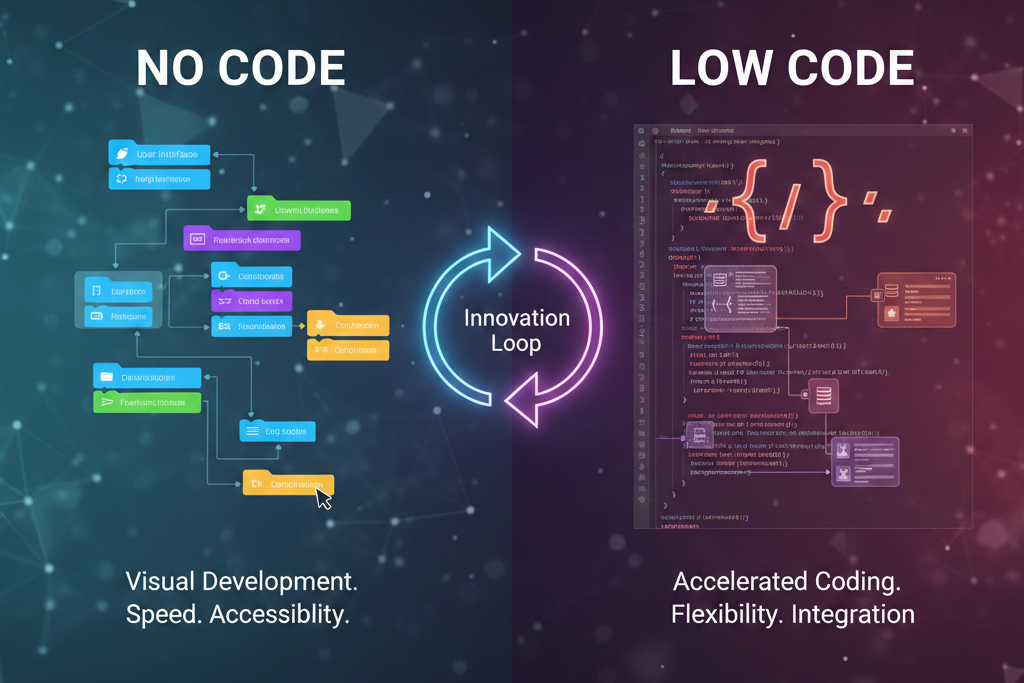
No-code is also a RAD approach and is often treated as a subset of the modular plug-and-play, low-code development approach. on other hand in low-code there is some handholding done by developers in the form of scripting or manual coding, no-code has a completely hands-off approach, with 100% dependence on visual tools.
Low-code is a method of quickly building applications that uses visual tools such as drag-and-drop features and drop-down menus to automatically create code. This approach lets users concentrate on the unique aspects of their project instead of the standard programming tasks. Low-code sits between manual coding and no-code platforms, allowing users to modify or enhance the automatically generated code when needed
why is it matter more for future
As the need for hyperautomation and modern IT solutions continues to rise, many organizations are finding it hard to keep pace. One major reason is the lack of skilled no-code and low-code professionals in the market. Because of this talent gap, several IT initiatives are pushed aside or delayed, simply due to insufficient technical resources. These delays directly affect time-to-market, making it harder for businesses to launch solutions quickly and stay competitive in an ever-evolving digital landscape.
TOP 3 no-code low-code platforms for 2026
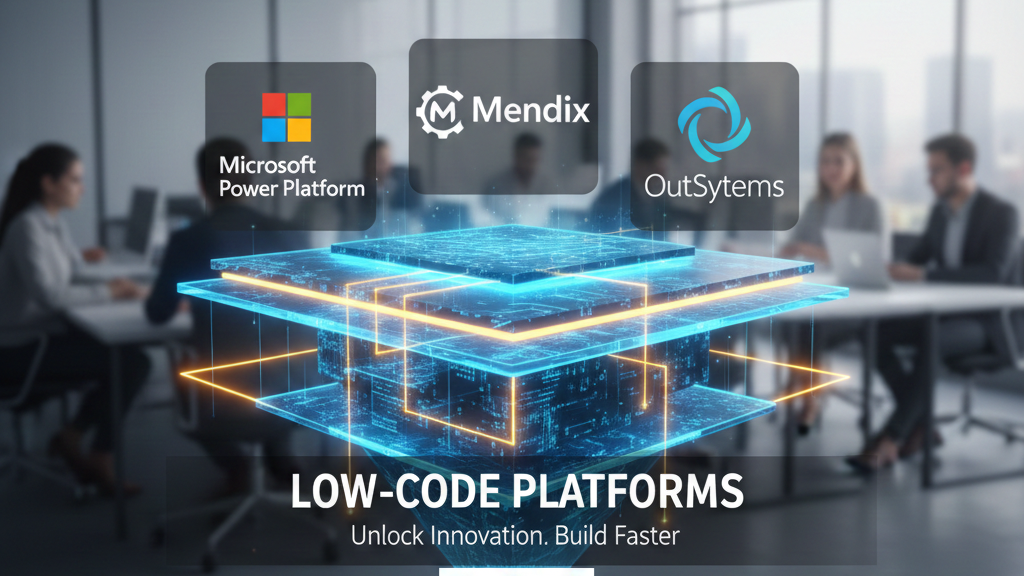
Microsoft power platform , Mendix , Outsystems
For 2026, the top no-code low-code platforms to watch include Microsoft Power Platform , OutSystems Mendix
Choosing the right low-code company is one of the most strategic decisions IT leaders will make in 2026. With the global no-code low-code platforms development market projected to reach $44.5 billion by the end of 2026 according to Gartner, enterprises are under increasing pressure to select platforms that deliver scalability, governance, and measurable ROI.
This guide provides an overview of the leading low-code platforms, highlights their key features, and assists in determining which provider best fits for your organization’s requirements.
Why industry leaders evaluate no-code low-code platforms
Enterprise evaluation systems have evolved dramatically over the years. By 2026, IT leaders are no longer looking only at features or pricing, they are focusing on deeper, more meaningful indicators. These include the financial stability of vendors, long-term customer retention, and strong market positioning in trusted industry reports such as the Gartner Magic Quadrant and Forrester Wave. Just as importantly, decision-makers want proven evidence that solutions can scale successfully across enterprises in similar industries.
Procurement armies will also check security instruments, compliance capabilities, and the dealer’s track record with regulated industries like healthcare, financial services, and manufacturing. The days of choosing a low law provider predicated on emotional rally donations alone are over. Organizations now demand substantiation of normal flyers, reference calls with lookalike type companies, and detailed total cost of power analyses before subscribing more than multiple time contracts.
Gartner’s forecasts strongly indicate no-code low-code platforms will hold significant, even dominant, value by 2035, predicting rapid growth, high adoption (70%+ of new apps by 2025), and evolution into essential enterprise ecosystems supporting both professional and citizen developers, driven by AI, digital transformation, and IT demand. While specific 2035 numbers aren’t in the snippets, trends point to NCLC becoming the standard for most application development, with projections for the market to reach tens of billions by 2029 and beyond.
5 PRO’s of no-code low-code platforms
1. Easy use
Simple to use Since these apps are not created from the bottom up, it is simpler to concentrate on fulfilling the needs of addicts while they are being developed. Renowned computer expert Koushik Sen of the University of Berkeley said, “Imagine a world where you don’t have to write law; just say what you want, and the computer does it for you.”
2. Fast Development
Druggies can fluently acclimate and acclimatize the main factors and introductory law of their operations, meaning that the factual development is veritably presto. In addition, druggies can integrate and connect apps, processes, and workflows from being operations. Forrester showed that low- law development platforms made development systems as much as 20 times faster than when done with traditional coding.
3. Lower costs
The reduction in time can save precious coffers. no-code low-code also makes conservation conditioning less complex, reducing costs and the burden on IT. In addition, you can test new ideas coming from nearly any department veritably inexpensively. These ideas can also revolutionise entire processes and increase productivity and effectiveness.
4. better experience
The ability to keep projects and workflows keep going and responsive to client feedback can significantly enhance both the client experience and their loyalty. Moreover, customer experience professionals can leverage no-code low-code platforms to create tailored client checks, e-commerce solutions, and client service tools.
5. increased automation
setting up some basic rules for decision-making, users can watch the creation of workflows that can be applied across various information channels. A lot of LCNC tools leverage RPA and utilize artificial intelligence along with machine learning to provide automation suggestions based on the data they already have.
How to choose the best no-code low-code platform from a vendor
choosing the right no-code low-code vendor makes your company or enterprise in the long run this helps to the leaders and mentors in the company a practical knowledge about the platform and how this work.
Main things to note before buying a no-code low-code platforms
Take references from clients who are identical in size to you. Talk to these visitors directly about their performance experience, the quality of the ongoing support, and any difficulties they have experienced.
Ask for a proof of concept that considers into account your particular use case. A proof of concept (POC) shows whether a no-code low-code platform can address your real-world issues, while general demos show what it can do in theory.
Find out how long an implementation typically takes and what tools your team will need. Determine whether you can manage execution internally or if you need to hire consultants
Find out about the roadmap for the product. What features will be added within the next 12 to 24 months? How does the supplier collect and apply consumer input to the creation of new products?
ask about exit strategies. what are the plans to leaving the platform in the future? Are you able to export your data and apps?